Launch offer — valid today only

📄 Digital book in PDF · read it on your phone or print it

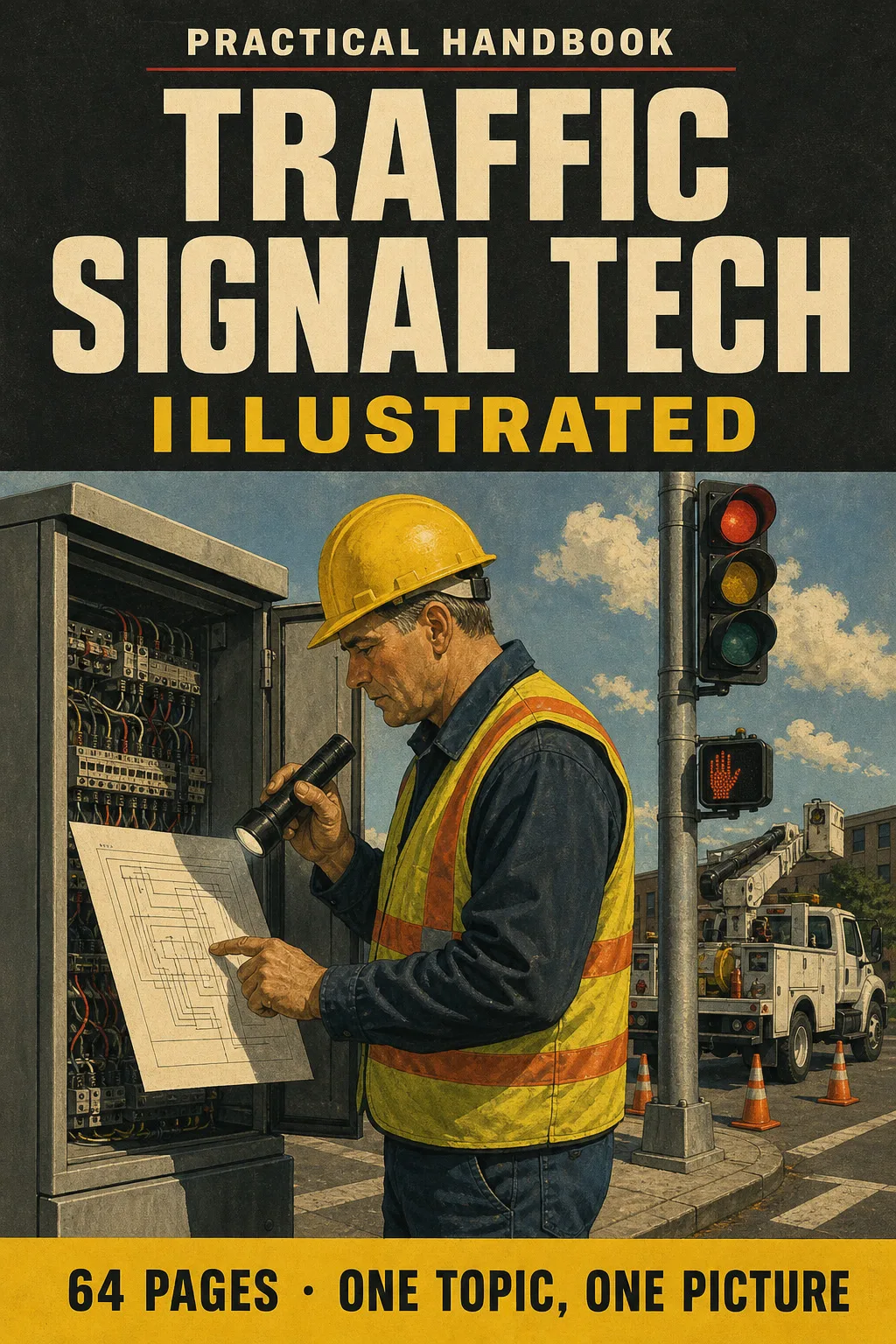
Traffic Signals and the IMSA Level I Exam, Illustrated One Topic on Every Page

From the open cabinet to the yellow formula and the 5-step troubleshooting order. Every topic gets its own page: the drawing first, then the numbers you need to remember. 64 illustrated pages.

GET THE ILLUSTRATED SIGNAL TECH BOOK

🔒 Secure checkout · PDF by email · 30-day guarantee

Every topic, its own pageEach cabinet part and timing rule drawn, with the explanation right beside it
64 illustrated pages8 parts, from the whole intersection to your review plan for exam day
Up-to-date sourcesMUTCD 11th Edition, NFPA 70 (NEC) and ITE timing practice
PDF by emailFormat

Look Inside the Book

Every page has one big drawing and a box with the numbers, rules and steps you need to know:

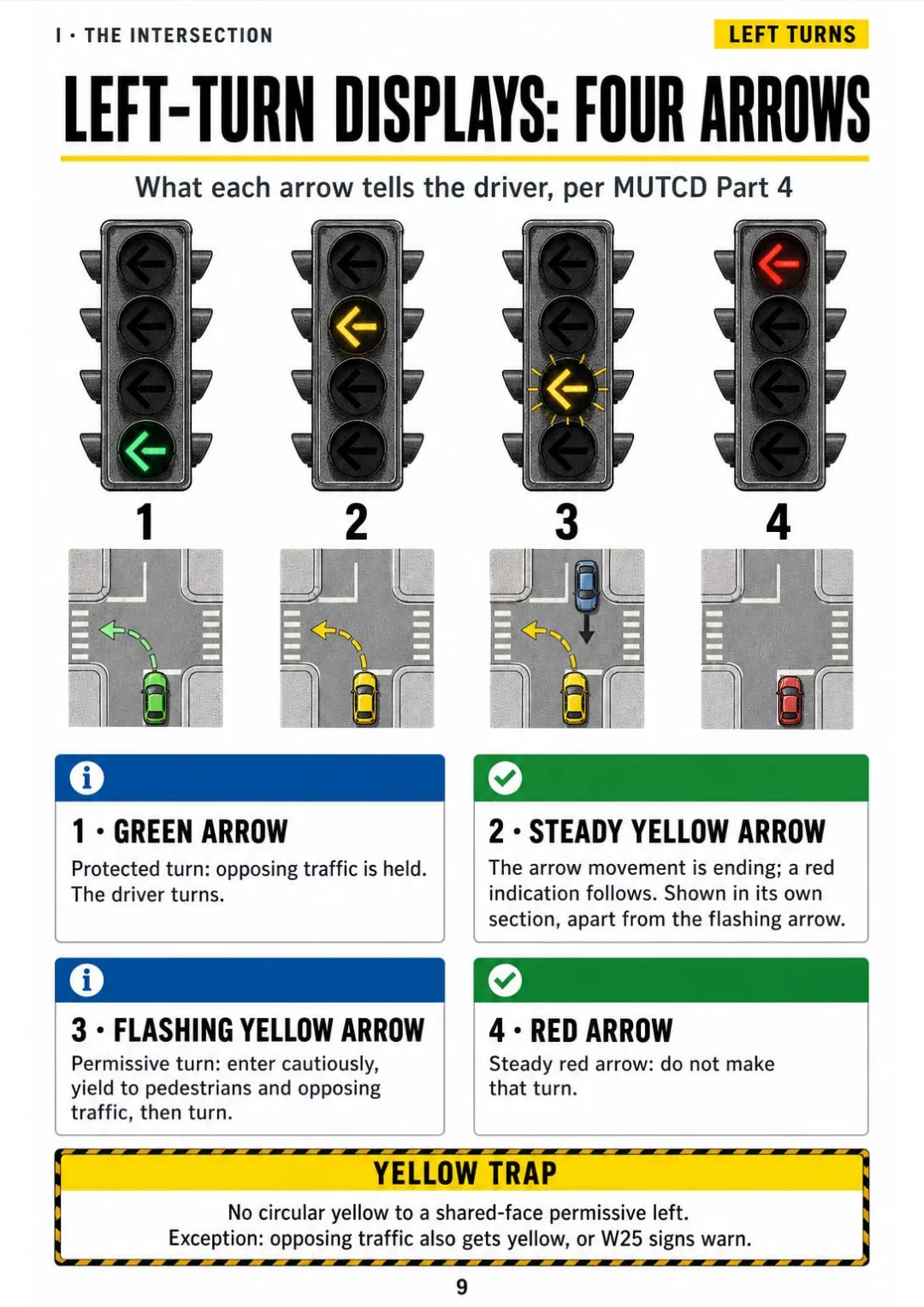
Flashing yellow arrow = permissive: yield to pedestrians and oncoming traffic
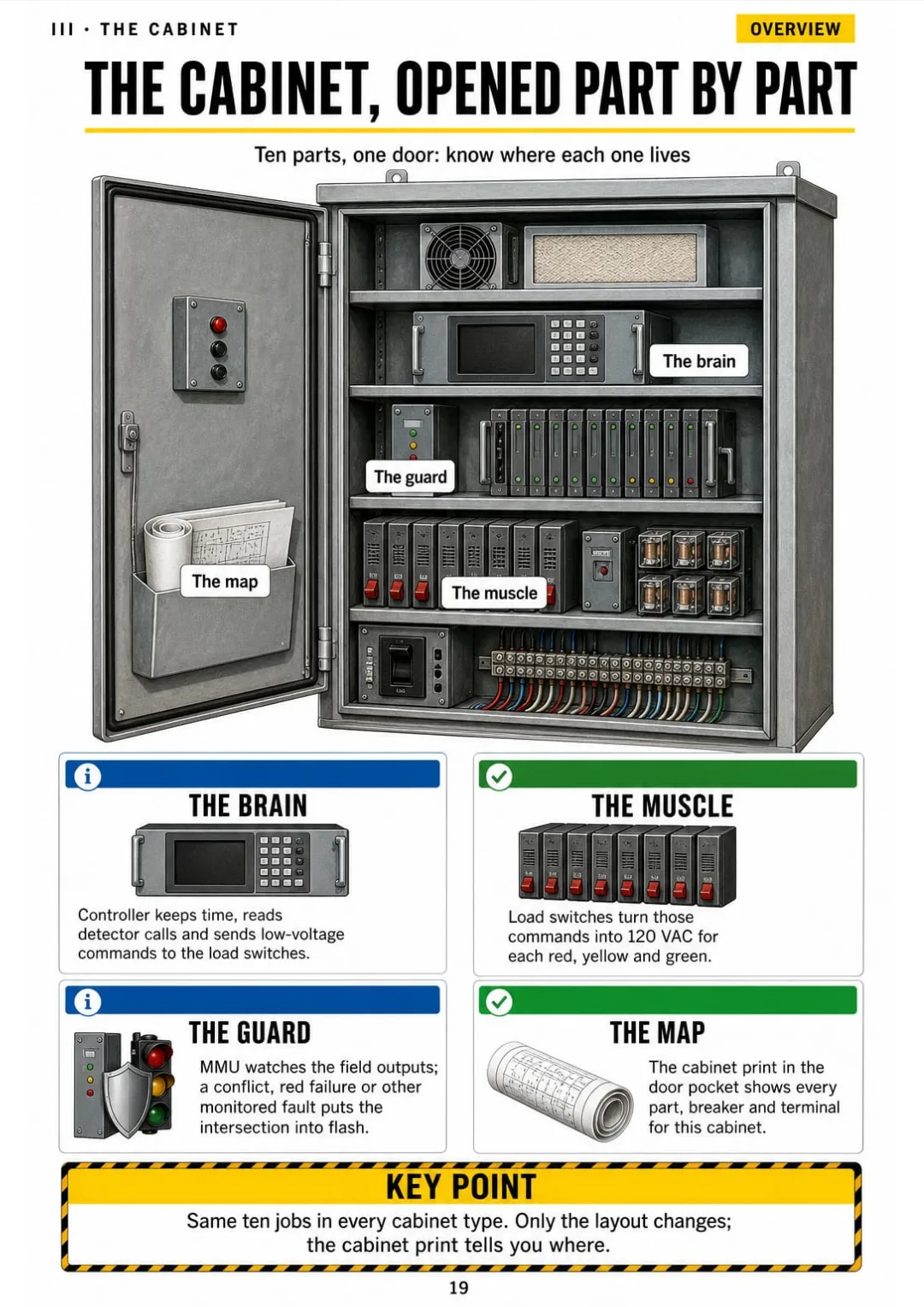
The open cabinet, part by part: controller, MMU, load bay, detectors, flasher, relays and more.
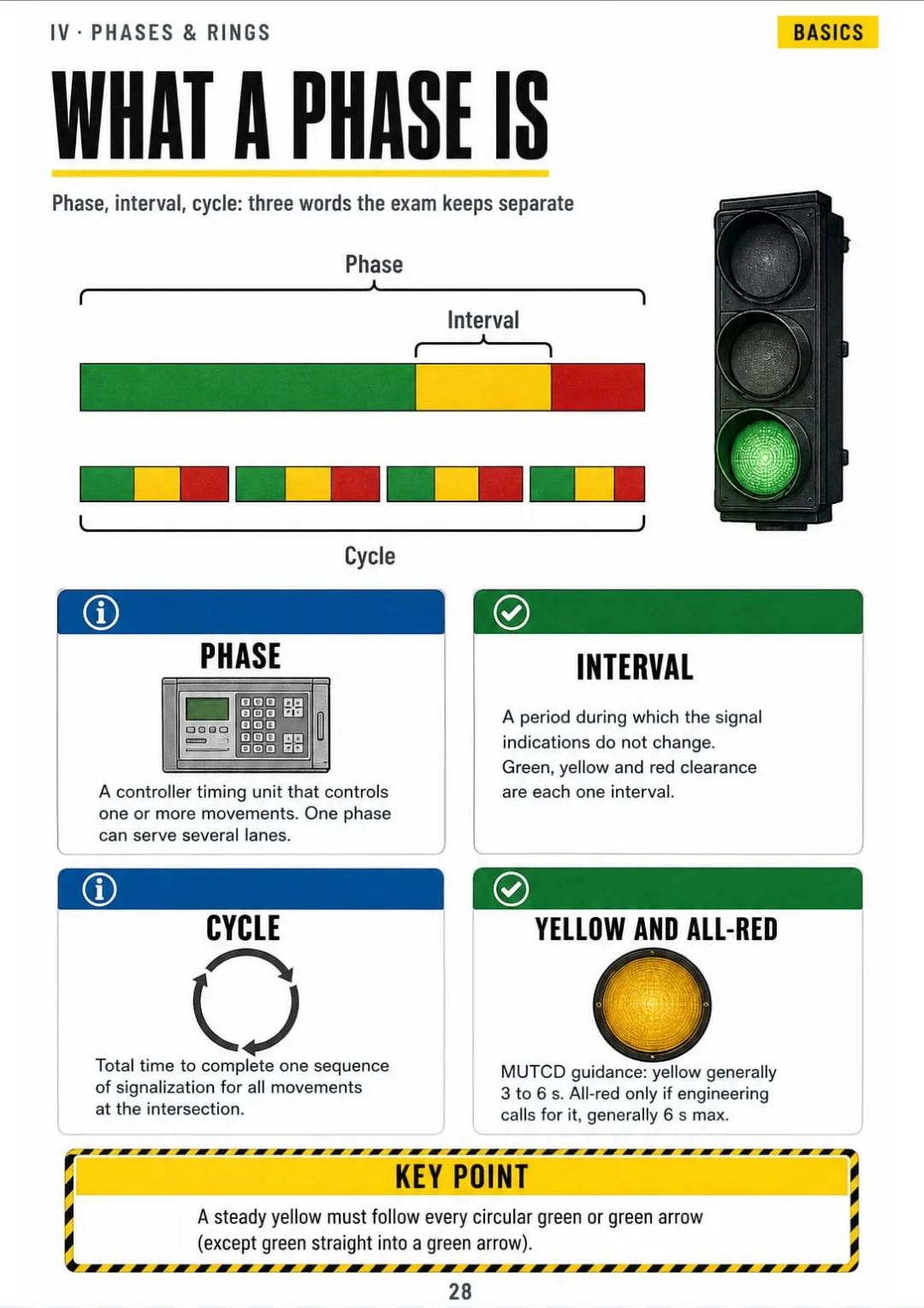
Phase, interval and cycle on one timeline bar: green, yellow change, red clearance.
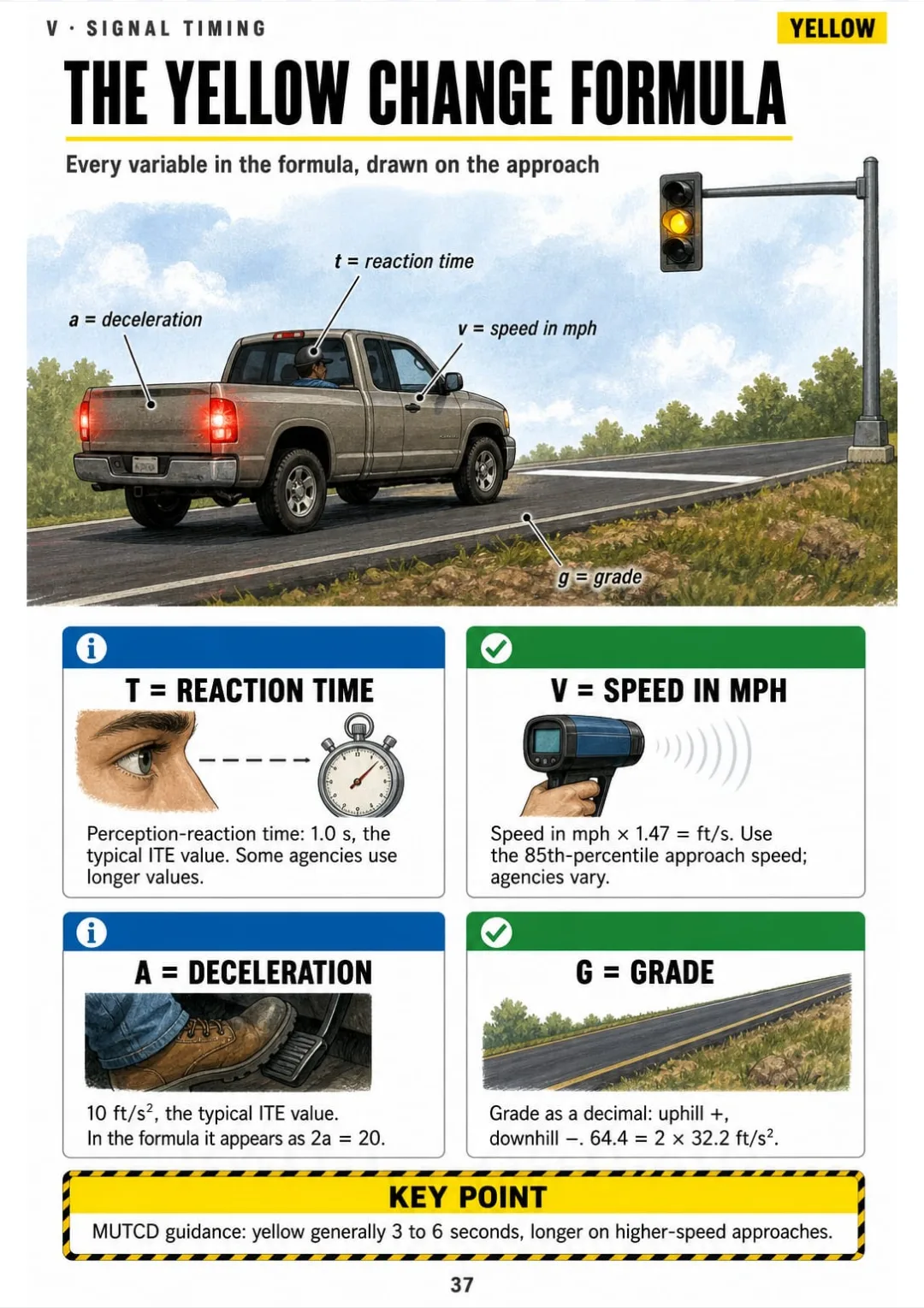
Y = t + 1.47v / (2a + 64.4g), with typical ITE values t = 1.0 s and a = 10 ft/s²
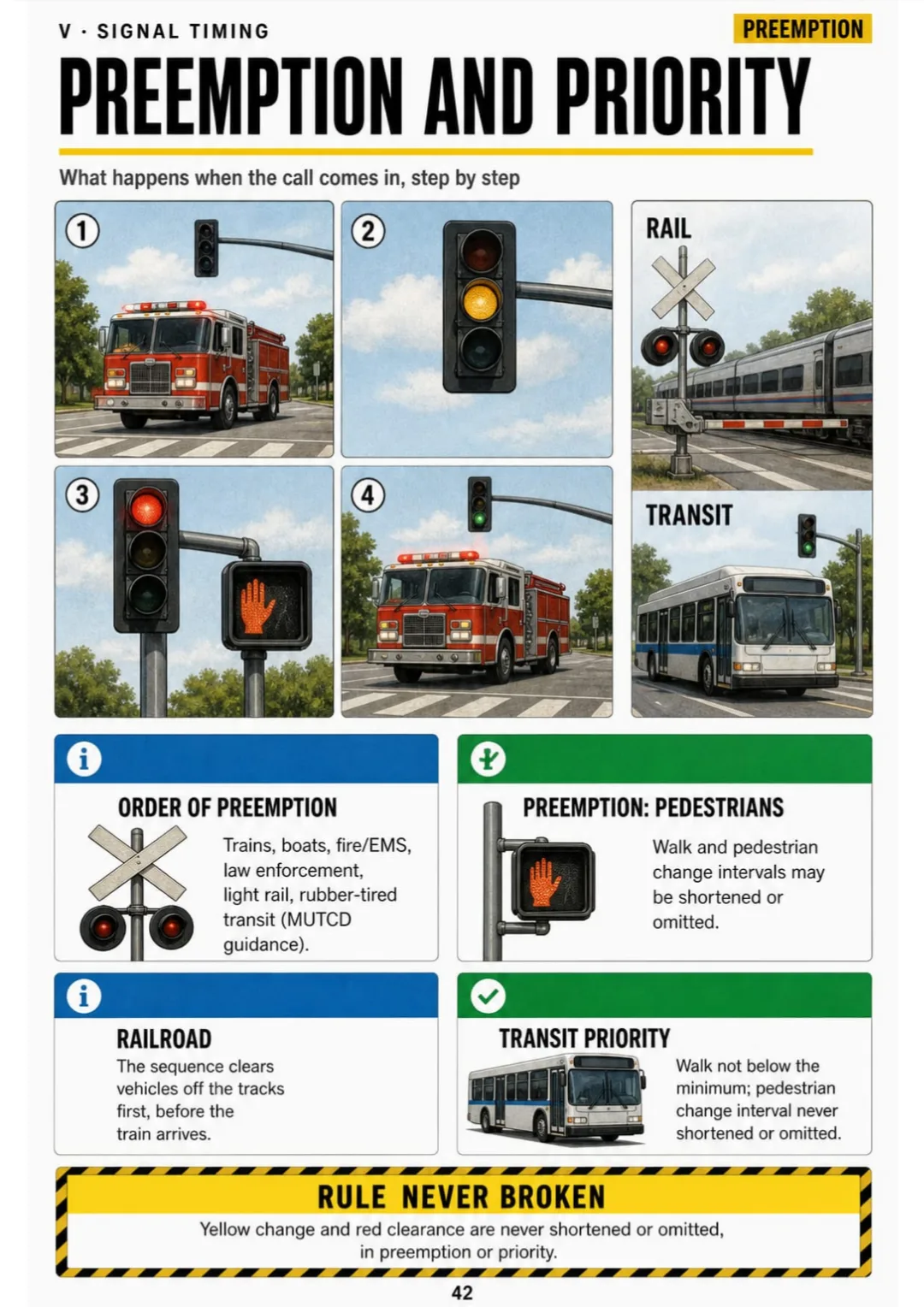
Preemption order, plus the rule: yellow and red clearance are never cut
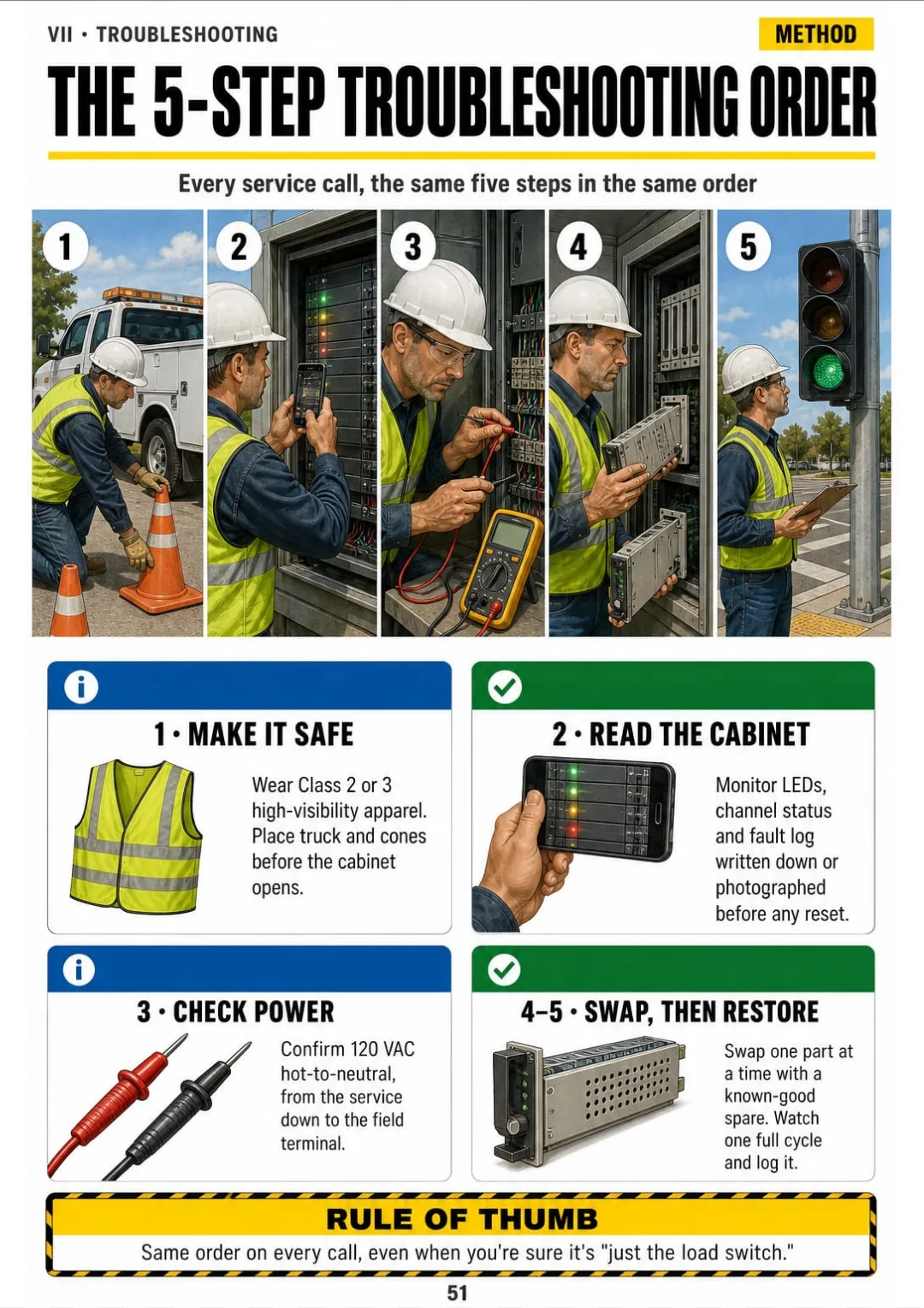
Safe → Read → Power → Swap → Restore: one full cycle watched before you leave.
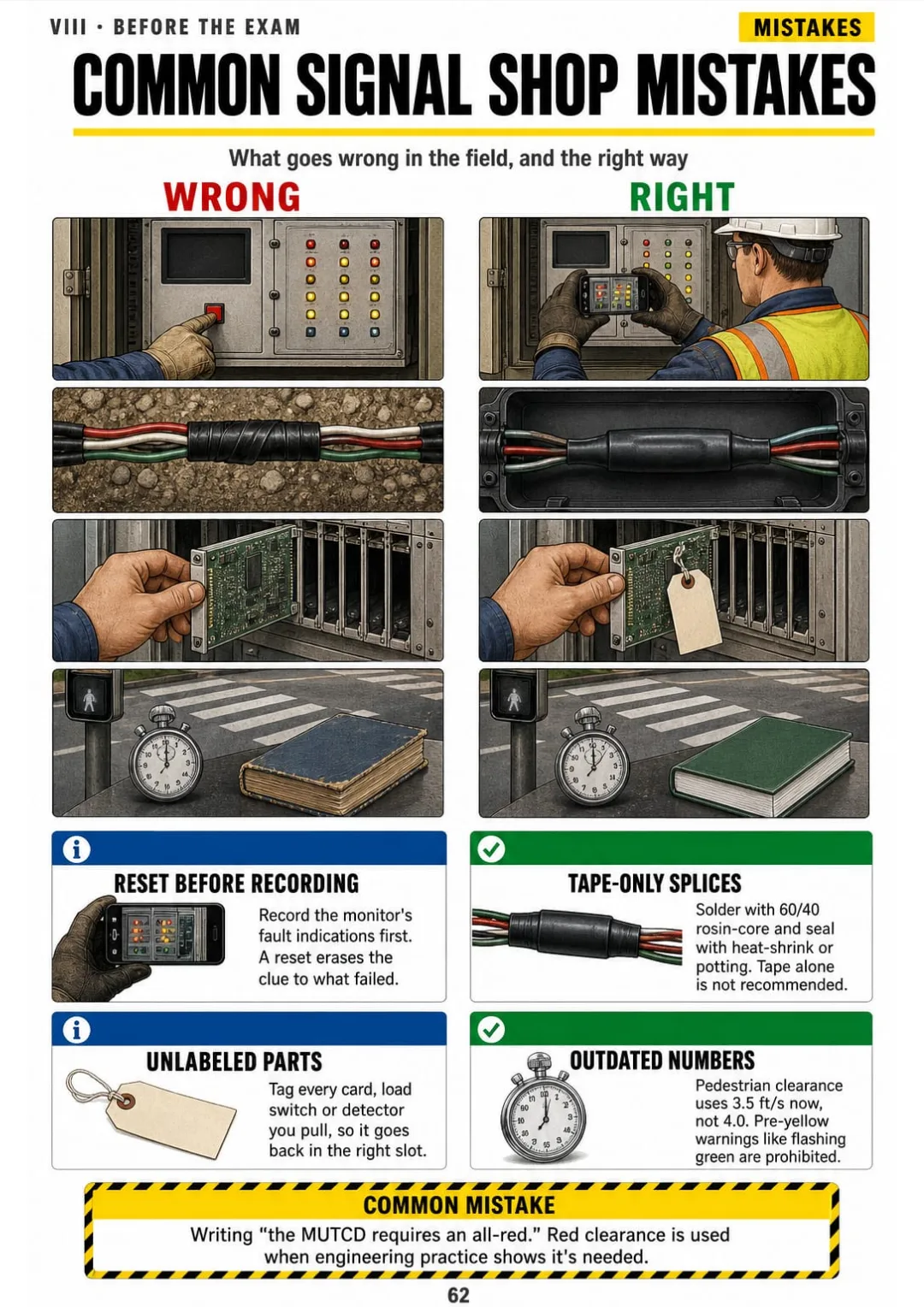
Reset before recording, tape-only splices, untagged parts, old 4.0 ft/s: wrong vs. right.
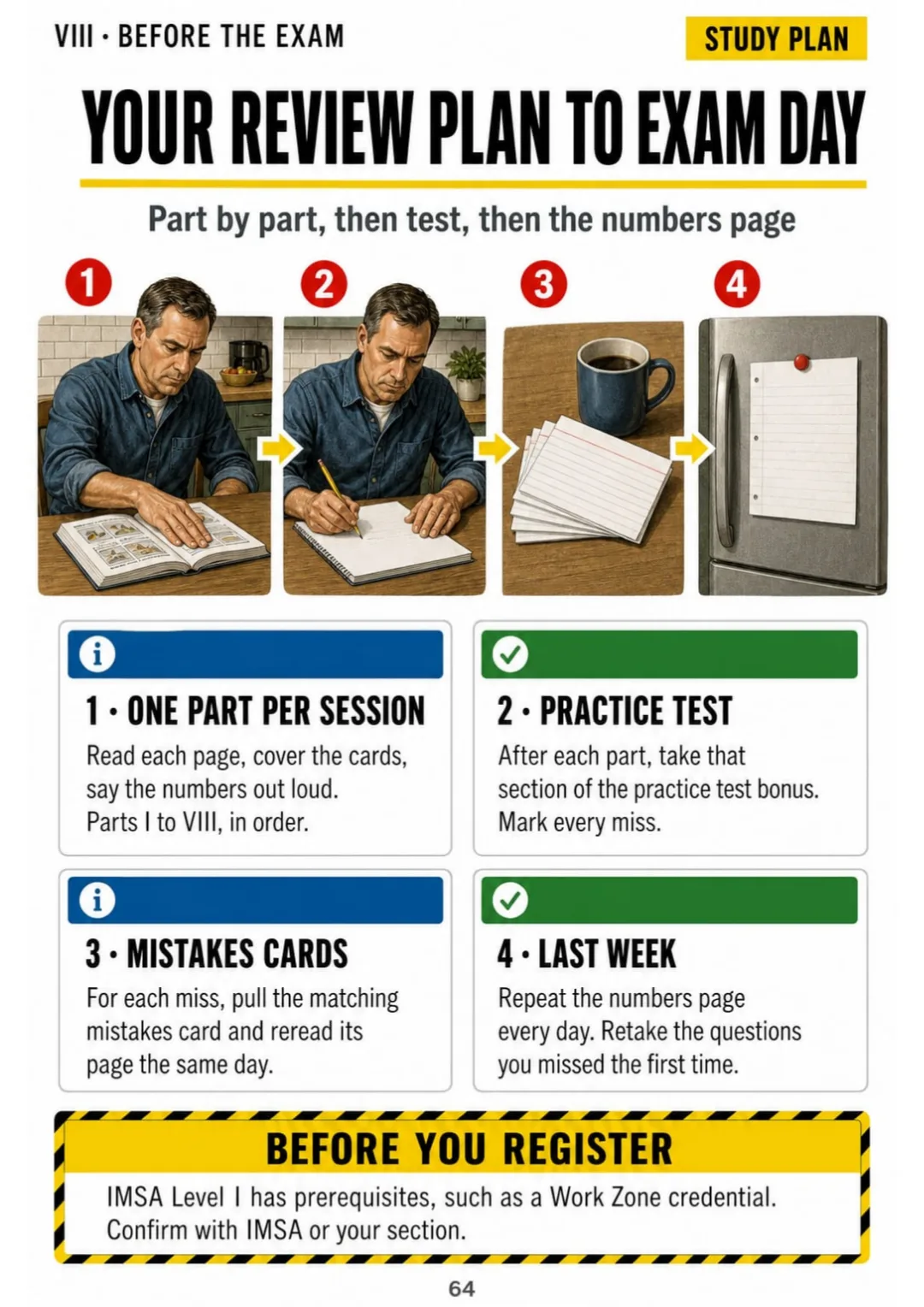
Read by part, practice test, mistakes cards, numbers page daily in the last week.

Swipe to see more →

These are real pages from the book. The table of contents is the full one: 8 parts and 60 topics.

The Problem Isn't You. It's How It Was Explained to You.

You're looking at the phase diagram on the plan sheet, and the senior tech asks which phases can run with phase 2. You know the answer is somewhere in that chapter on rings and barriers.

It doesn't come. The manual covers the barrier in half a page of paragraphs: concurrency groups, compatible movements, ring sequences. Sentence after sentence, and not one picture of what's actually moving through the intersection.

Phase, interval and cycle on one timeline bar: green, yellow change, red clearance.

In the book, the barrier is one page. A thick line down the middle of the dual-ring diagram: 1, 2, 5, 6 on the left, 3, 4, 7, 8 on the right. One phase per ring, same side of the line: those run together.

The same goes for the open cabinet, load switches, the yellow change formula, loop splices and the 5-step troubleshooting order. Each one has its own page.

You look at the drawing and it makes sense. Next time the plan is spread on the tailgate, you read it without going back to the manual.

COMPARE FOR YOURSELF

The Same Topic, Two Ways to Study It

THIS
  • The manual: line after line after line
  • Cabinet components described only in words
  • You show up to the exam with doubts
The traffic signal controller cabinet houses the equipment necessary for the operation of the intersection. Incoming service is terminated at the power panel, which typically includes the main breaker, equipment breakers, a surge protective device and a radio interference filter. The controller unit is mounted on a shelf and communicates with the load bay, where load switches convert low-voltage outputs into switched AC field circuits. The malfunction management unit continuously monitors field outputs for conflicting indications and, upon detection, initiates flash operation through the flash transfer relays.
FOR THIS
  • The open cabinet in one drawing
  • The 10 parts numbered in a box
  • You see it and it clicks
The open cabinet, part by part: controller, MMU, load bay, detectors, flasher, relays and more.
CONTENTS

Take a Look at the 8 Parts and 60 Topics

The intersection as one map, electricity and safety, the controller cabinet, phases and rings, signal timing, detection, troubleshooting in 5 steps and your exam review: 64 pages, all illustrated.

IThe Intersection as One Map · pp. 5-11
  1. The Whole Intersection on One Drawing
  2. Mast Arm vs. Span Wire
  3. Anatomy of a Signal Head
  4. How Many Faces an Approach Needs
  5. Left-Turn Displays
  6. Pedestrian Signal Heads
  7. Underground: Conduit, Pull Boxes, Home Runs
IIElectricity and Safety in the Signal Shop · pp. 12-18
  1. Ohm's Law with a Signal Example
  2. The 120/240 V Service
  3. Using the Multimeter Right
  4. Grounding and Bonding
  5. AC and DC Inside the Cabinet
  6. Working in the Street
  7. Electrical Safety at the Cabinet
IIIInside the Controller Cabinet · pp. 19-27
  1. The Cabinet Opened, Part by Part
  2. Cabinet Types: TS 1, TS 2, 332, ATC
  3. The Power Panel
  4. What the Controller Actually Does
  5. Load Switches
  6. Flasher and Flash Transfer Relays
  7. Conflict Monitor / MMU
  8. The Program Card
  9. Police Panel and Field Terminals
IVPhases, Rings and Barriers · pp. 28-34
  1. What a Phase Is
  2. NEMA 8-Phase Numbering
  3. The Dual-Ring Diagram
  4. The Barrier
  5. Lead, Lag and Lead-Lag Left Turns
  6. Overlaps
  7. Reading a Phase Diagram on the Plan
VSignal Timing · pp. 35-42
  1. The Intervals in Order
  2. Pretimed, Semi-Actuated, Fully Actuated
  3. The Yellow Change Formula
  4. Yellow, Worked Step by Step
  5. All-Red Clearance, Worked
  6. Pedestrian Timing
  7. Coordination: Cycle, Split, Offset
  8. Preemption and Priority
VIDetection and Pedestrians · pp. 43-50
  1. How an Inductive Loop Works
  2. Loop Layouts
  3. Sawcut and Loop Install
  4. Lead-In and Splice
  5. Detector Amplifier Settings
  6. Testing a Loop
  7. Video, Radar and Microwave
  8. Pushbuttons and Accessible Pedestrian Signals
VIITroubleshooting in 5 Steps · pp. 51-58
  1. The 5-Step Order
  2. Step 1: Arriving at a Dark or Flashing Intersection
  3. Step 2: Reading the Monitor Before Reset
  4. Fault: Dark Signal
  5. Fault: Intersection in Flash
  6. Fault: Stuck Phase
  7. Fault: One Indication Out
  8. Fault: Detector Not Calling or Always Calling
VIIIBefore the Exam · pp. 59-64
  1. The Numbers on One Page
  2. Terms That Get Mixed Up
  3. Signal Indications and What They Mean
  4. Common Signal Shop Mistakes
  5. Cabinet Visit Checklist
  6. Your Review Plan to Exam Day

One Page, One Topic, All Clear

Think of it this way:

You're on call, the intersection on Main is in flash, and the monitor log is blinking at you. You need to know what each part of that cabinet does, right now.

In the book you open the cabinet page and see it drawn open: 10 numbered parts, from the controller and the MMU to the load bay, the flasher and the relays. Every part in its place, with one line on what it does.

Preemption order, plus the rule: yellow and red clearance are never cut

Same with the barrier, yellow worked step by step, pedestrian timing, loop testing and the 5-step troubleshooting order: each one on its own page.

Traffic Signal Tech Illustrated is 8 parts and 60 topics, all drawn, and it ends with the numbers on one page, a cabinet visit checklist and your review plan.

What you see drawn, you don't have to memorize.

What's Inside Traffic Signal Tech Illustrated:

Ipp. 5-11

The Intersection as One Map

The whole intersection on one drawing, mast arm vs. span wire, signal head anatomy, faces per approach, left-turn and ped displays, conduit and pull boxes.

IIpp. 12-18

Electricity and Safety in the Signal Shop

Ohm's Law with a signal example, the 120/240 V service, using the multimeter, grounding and bonding, AC and DC in the cabinet, street and electrical safety.

IIIpp. 19-27

Inside the Controller Cabinet

You open any cabinet and know what each part does: TS 1, TS 2, 332 and ATC, the power panel, the controller, load switches, flash transfer, the MMU, the program card and field terminals.

IVpp. 28-34

Phases, Rings and Barriers

What a phase is, NEMA 8-phase numbering, the dual-ring diagram, the barrier, lead and lag lefts, overlaps and reading the phase diagram on the plan.

Vpp. 35-42

Signal Timing

The intervals in order, pretimed vs. actuated, the yellow change formula worked step by step, all-red, pedestrian timing, cycle-split-offset and preemption.

VIpp. 43-50

Detection and Pedestrians

How a loop works, loop layouts, sawcut and install, lead-in and splice, amplifier settings, testing a loop, video, radar and microwave, and accessible ped signals.

VIIpp. 51-58

Troubleshooting in 5 Steps

You arrive at every fault with the same order: the 5 steps, a dark or flashing intersection, reading the monitor before reset, and each fault drawn: dark, flash, stuck phase, one indication out, detector.

VIIIpp. 59-64

Before the Exam

The numbers on one page, terms that get mixed up, signal indications, common shop mistakes, the cabinet visit checklist and your review plan.

At the end of the book: The numbers on one page, a cabinet visit checklist and a review plan to exam day.
Plus: 2 Free Books

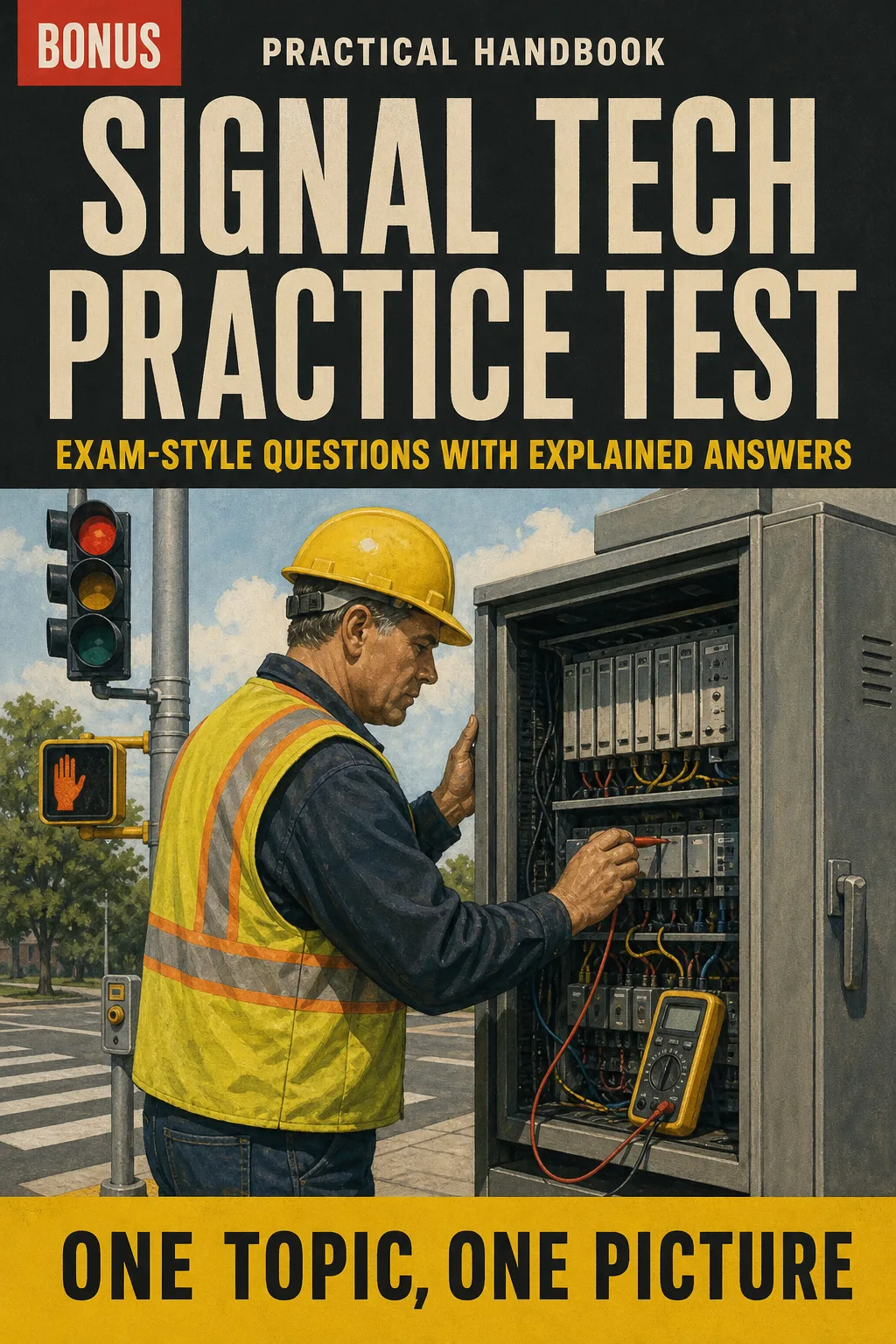
Signal Tech Practice Test: Exam-Style Questions with Explained Answers

BONUS 1: «Signal Tech Practice Test: Exam-Style Questions with Explained Answers»

Value on its own: US$ 17.90

Practice every topic of the Level I outline with exam-style questions, and see in one line why each answer is right or wrong.

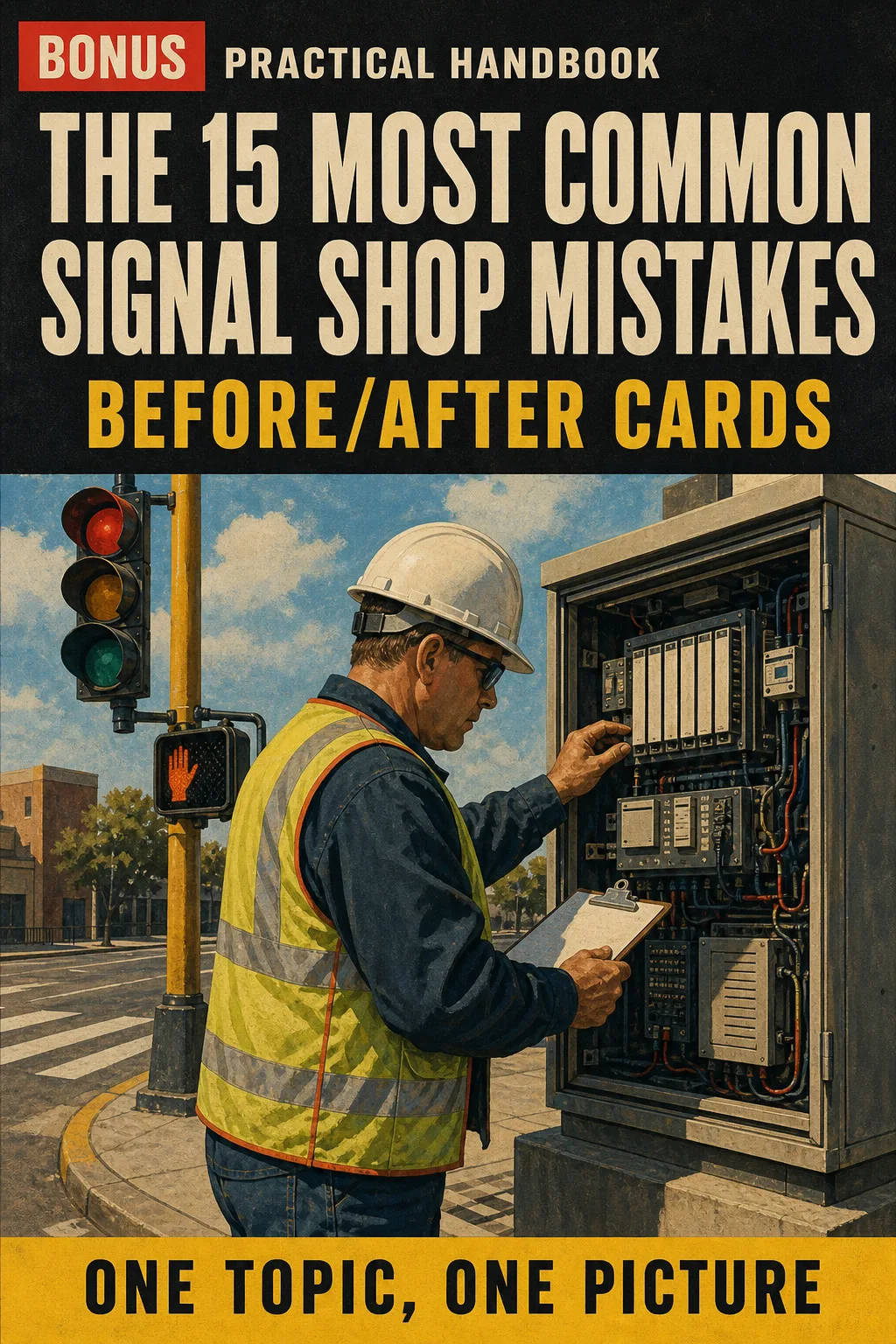
The 15 Most Common Signal Shop Mistakes: Before/After Cards

BONUS 2: «The 15 Most Common Signal Shop Mistakes: Before/After Cards»

Value on its own: US$ 14.90

Review the errors new techs make most often, from loop splices to flash transfer, each one drawn wrong and right on the same card.

Traffic Signal Tech Illustrated with 2 Free Books

  • Traffic Signal Tech Illustrated: 64 illustrated pagesUS$ 63
  • BONUS 1: Signal Tech Practice Test: Exam-Style Questions with Explained AnswersUS$ 17.90
  • BONUS 2: The 15 Most Common Signal Shop Mistakes: Before/After CardsUS$ 14.90
  • High-resolution PDF to printIncluded
Total value US$ 95.80
YOUR PRICE:
US$ 27
You save US$ 68.80
YES, I WANT TRAFFIC SIGNAL TECH ILLUSTRATED FOR US$ 27

📄 This is a digital PDF book sent to your email: nothing is printed or shipped.

Secure purchaseEncrypted payment30-day guarantee

PDF by email: We email you Traffic Signal Tech Illustrated as a PDF, together with the two free books. It's a single payment: no installments, no extra charges.

Who This Book Is For

You're new to the signal shop

You're new to the signal shop

You see the whole intersection and the cabinet as one map, so the parts stop being a list of names.

Your Level I exam is on the calendar

Your Level I exam is on the calendar

You review every topic with a drawing and a box of numbers, and finish with all the numbers on one page.

You already work signals

You already work signals

You keep the 5-step troubleshooting order and the cabinet visit checklist printed in the truck.

Everything You Get Today

US$ 95.80US$ 27
YES, I WANT TRAFFIC SIGNAL TECH ILLUSTRATED FOR US$ 27

📄 This is a digital PDF book sent to your email: nothing is printed or shipped.

30DAYS
GUARANTEE

30-Day Guarantee

Try Traffic Signal Tech Illustrated for 30 days, bonus books included.

We refund everything if the file won't open, if the book isn't what you see here, if you were charged twice or if the email doesn't arrive. Just email us.

You pay once. No subscriptions.

Frequently Asked Questions

Is it for me if I work in public works or I'm an electrician moving into the signal shop?

Yes. It starts from the whole intersection and builds up to timing and troubleshooting. If you already do electrical work, Part II is a quick review and the rest is signal-specific: phases, rings, timing, detection.

Is it for the current IMSA Level I exam, and is it written for the US?

It's checked against the MUTCD 11th Edition (FHWA), NFPA 70 National Electrical Code, ITE practice for change and clearance intervals, and the topics in the IMSA Traffic Signal Level I study material. Some states use their own MUTCD or a state supplement (California and Texas, for example), and agencies adopt different NEC editions: always confirm local values with your agency.

Is it official material?

No. It's an independent study book, not published, affiliated with or endorsed by IMSA, NFPA or FHWA. It doesn't give you a certificate or count as course hours: your IMSA certification comes from IMSA when you pass their exam. The book is for studying and reviewing before that.

Does it replace the course or on-the-job training?

No. It helps you study and review. It doesn't replace IMSA training, your agency's procedures or supervised field work.

Are the practice questions the ones on the exam?

No. They're written for this book, following the exam topics, and they aren't official questions from any exam.

When and how do I get it?

As a PDF by email, sent to the address you enter at checkout. The 2 bonus books come the same way.

Do I have to pay every month?

No. It's a one-time payment.

Can I have it on paper?

It comes as a PDF by email, not as a printed book. The PDF is printable: print the whole book or just the pages you need, like the 5-step order and the cabinet checklist, and keep them in the truck.

How does the refund work?

You have 30 days. We refund everything if the file won't open, if the book isn't what you see on this page, if you were charged twice or if the email doesn't arrive: just email us.

Before You Close This Page

No more rereading with nothing sticking.

The cabinet, the barrier, the yellow formula: you see them drawn, and you've got it.

You walk into the exam knowing where everything is.

Drawings make studying faster.

The book is right below.

One-time payment: US$ 27 · Guarantee: 30 days · PDF by email

YES, I WANT TRAFFIC SIGNAL TECH ILLUSTRATED FOR US$ 27

📄 This is a digital PDF book sent to your email: nothing is printed or shipped.